
Results
Client details are anonymized where required. Happy to talk through any of these in detail, and to connect you with references at the appropriate stage.
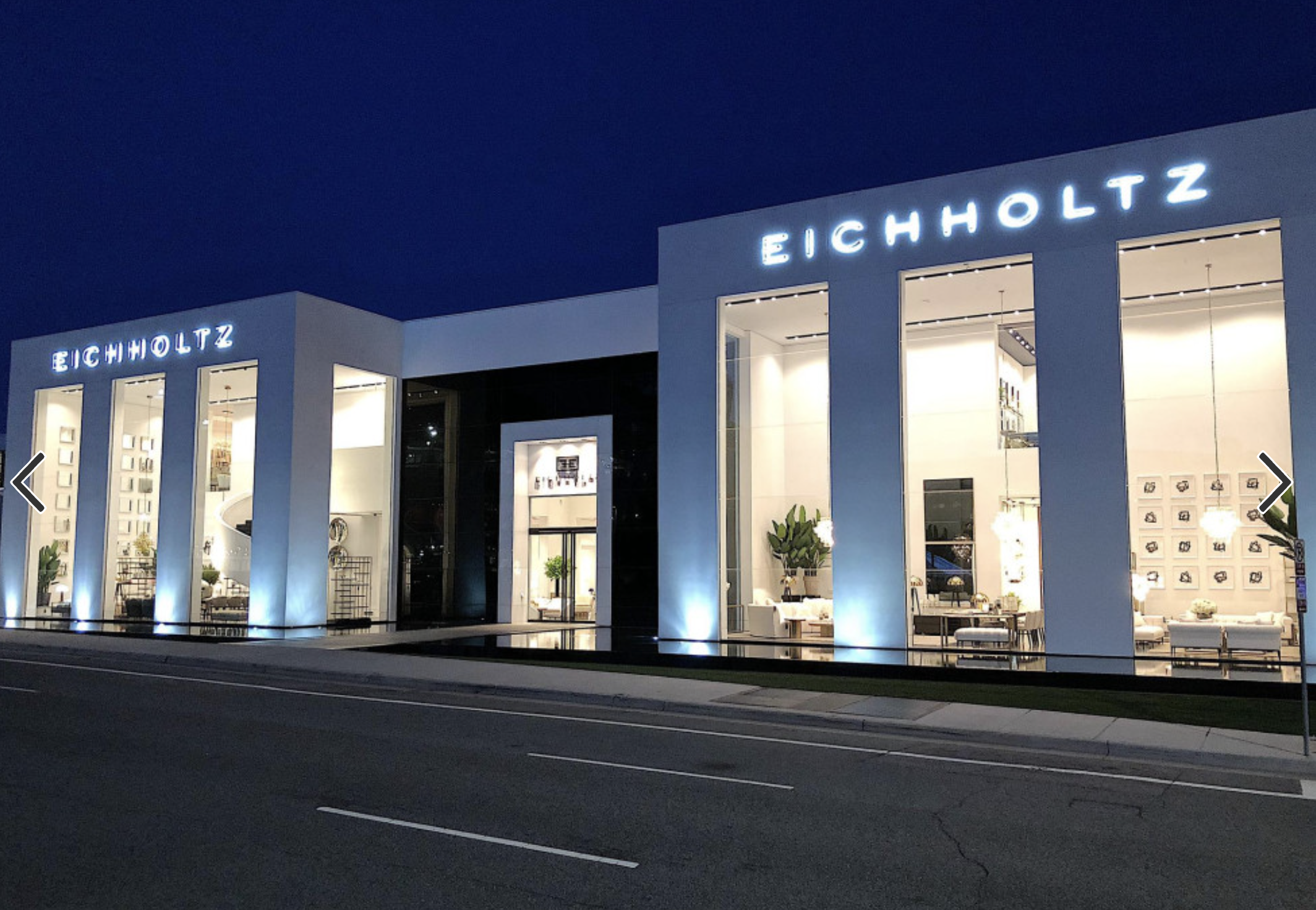
Eichholtz
Took a European manufacturer to a new market
Netherlands into the United States · from 2017 · Market entry, distribution and sales network
The situation. Eichholtz is a Dutch luxury furnishings brand with an established European business and, in 2017, no presence in the United States. The US residential luxury market is the largest in the world and among the hardest to enter, cold. Distribution is fragmented, showroom relationships are regional and long-held, and the designer trade buys on relationship rather than catalogue — none of which a European sales structure prepares you for.
What we did. Built the US entry from nothing: brand launch, market and positioning strategy for the American designer and retail trade, a marketing plan, physical distribution and exhibition strategy, and recruitment of a national sales representative network across the country.
What changed. From no US presence in 2017, Eichholtz is now established across the US residential luxury furnishings category. It has established a USA subsidary and its own distribution, now even manufacturing some of its products in the USA.
"Tim and his team at BIG were commissioned to help Eichholtz launch its brand and establish a sales and marketing program for the USA market. They exceeded our expectations in helping develop a strategy and marketing plan which generated significant publicity, while also helping us build a sales team across the USA. They helped guide us through some complex issues concerning our physical distribution and exhibition strategy. We offer our highest recommendation for the use of their services."
Jay van Galen Last — Commercial and Business Development Director, Eichholtz, the Netherlands
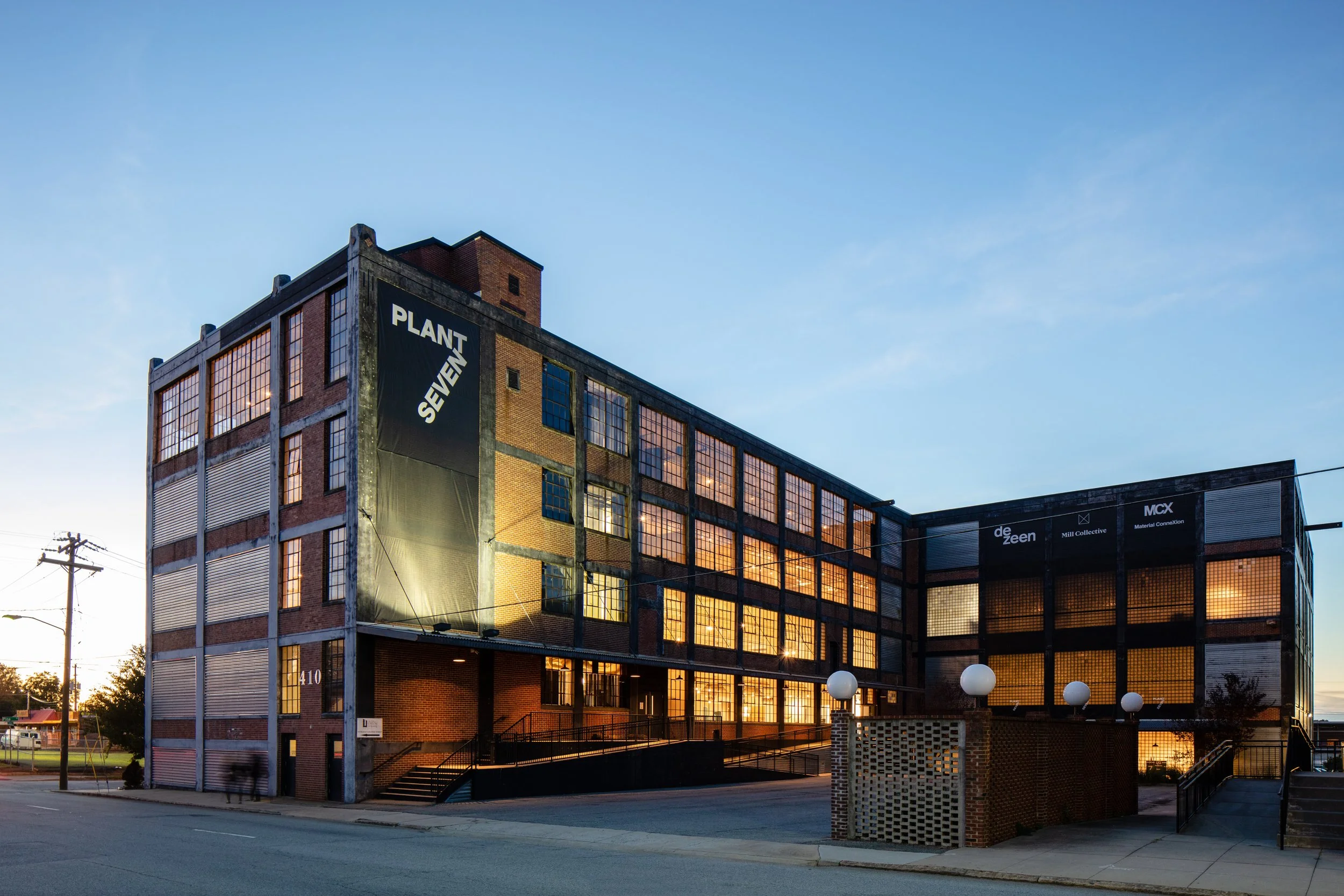
Plant Seven
Envisioned innovation and creative hub and raised money for public-private deal
High Point, North Carolina · 2017–2019 · Joint venture with the High Point Chamber of Commerce and the Congdon Foundation
The situation. Seventy-five thousand people travel to High Point twice a year for the world's largest furnishings market. Between those two weeks, the city empties. Meanwhile the emerging designers and small makers producing much of the work the trade actually wants could not afford a showroom lease, and had no route to the buyers arriving on their doorstep. The city had a downtown regeneration problem and the industry had an access problem, and they were the same problem.
What we built. A joint venture between Branscome International Group, the High Point Chamber of Commerce and the Congdon Foundation, supported by grants from the State of North Carolina: a 10,000 square meter (100,000 square foot) innovation and cultural center in the former Adams-Millis Hosiery Mill, a 100-year-old building in the city's downtown.
We assembled the delivery team, including Louis Cherry Architecture, Standard Issue Design and Da Da Goldberg and raised $3 million — a $1.5 million State of North Carolina grant matched by private donors including David Congdon of Old Dominion Freight Line, High Point University, International Market Centers, and Bill Millis. The venture was structured as HP365, a 501(c)(3) non-profit.
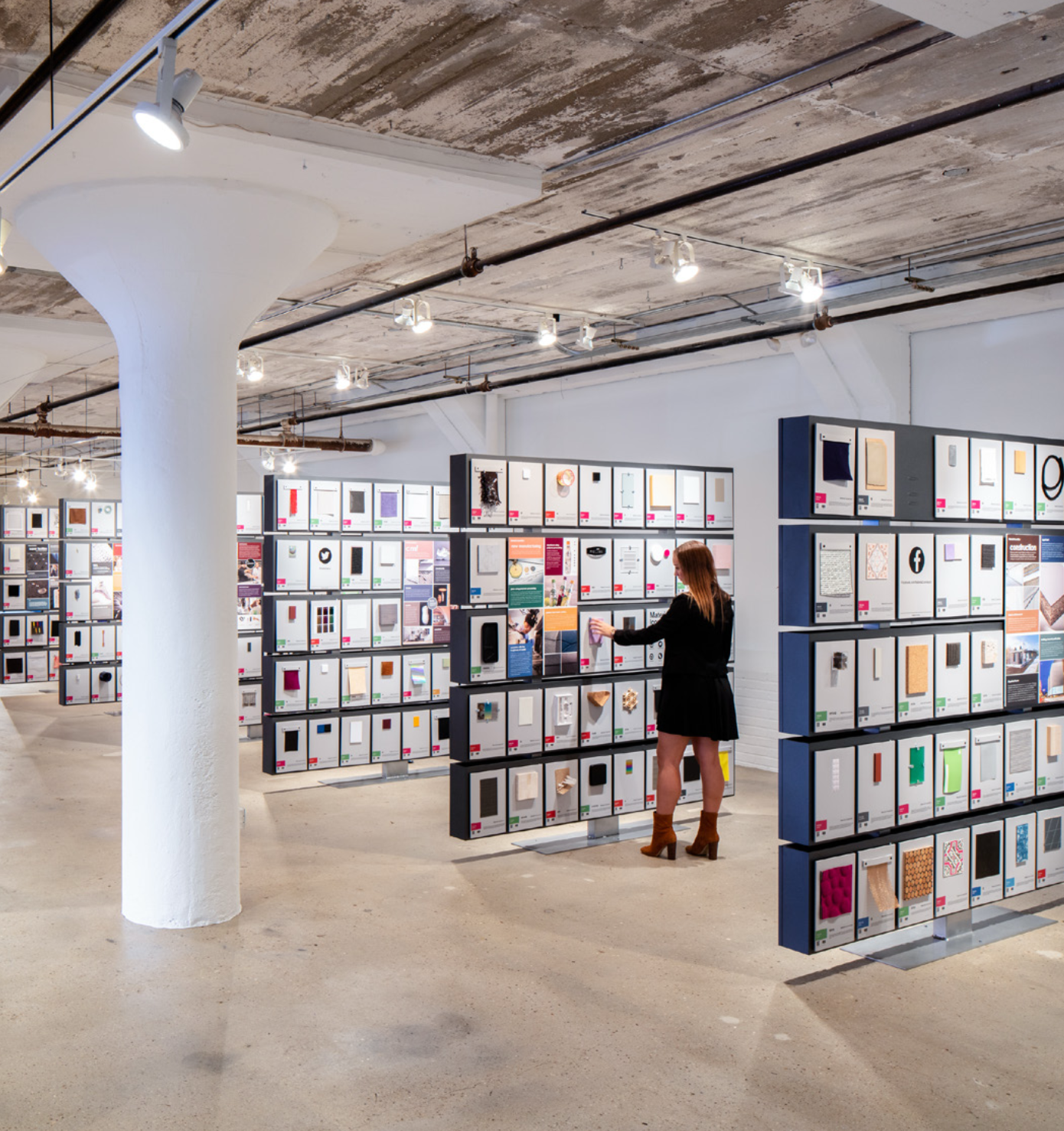
What it changed. Plant Seven opened at High Point Market in October 2018. Dezeen's editors curated the design store, stocked with work sourced from across the American South; Draw Down Books ran the design bookshop; Material ConneXion installed what was reported as the largest materials library on the East Coast outside New York City; and the co-working preview was furnished by Arper (Italy) and BuzziSpace (Belgium), both of which had recently opened factories in High Point. The store's stock almost entirely sold out during Market week.
The opening exhibition, "This Is Not A Chair," filled 800 square meters (8,000 square feet) with work by more than forty artists and designers from around the world — Philippe Malouin, Ladies & Gentlemen Studio, Gabriel Tan, Fort Standard, MOS Architects and Kim Markel among them — asking what furniture is for. Produced with the Brooklyn agency Standard Issue Design, it ran from 12 October to 11 January. A second showcase introduced Mill Collective, then twenty-odd furniture makers including Skram, Niche Modern and Elijah Leed.
"Plant Seven represents a new approach for the city. It will allow for talent to emerge from the grassroots, and our programming will speak to the next generation with a blend of art and design that will resonate internationally."
DeZeen Magazine, October 2018
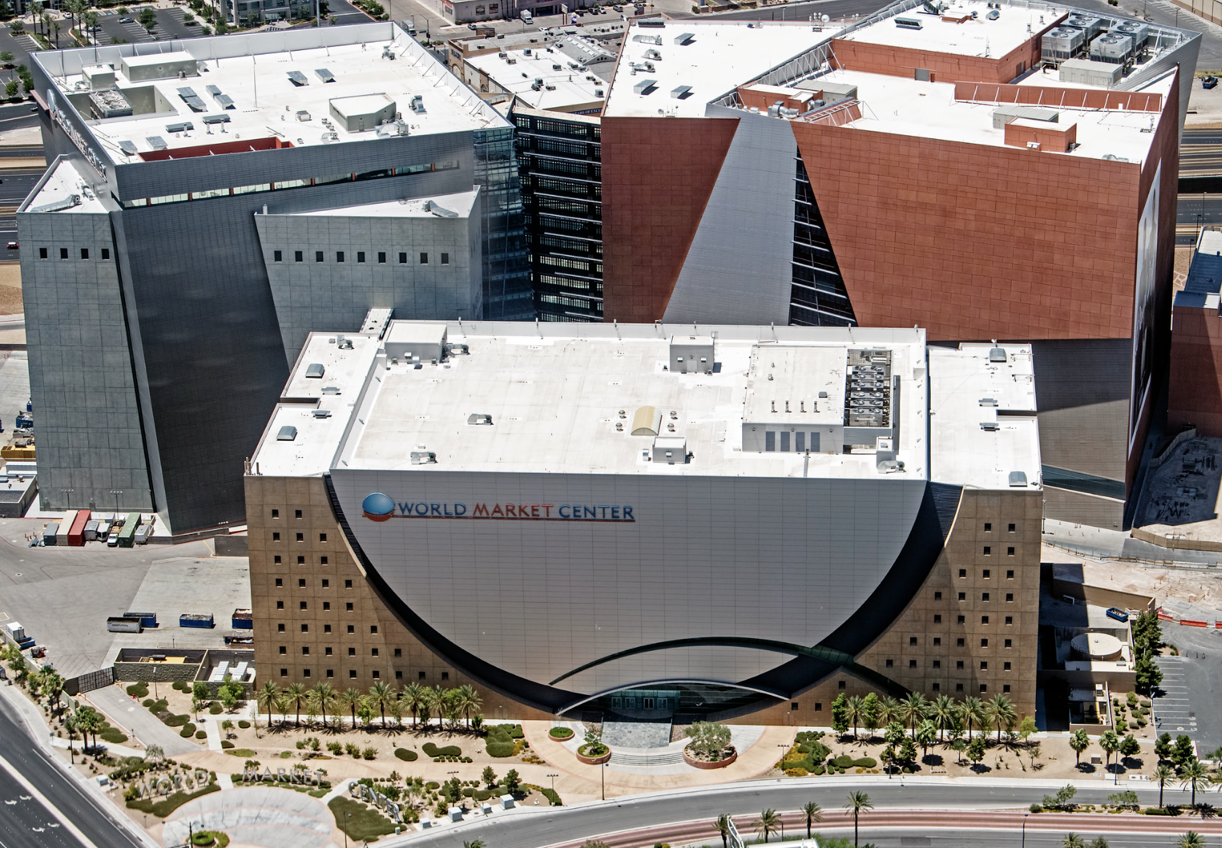
Las Vegas Market and World Market Center
Development of a large scale international trade platform
Las Vegas · 2005–2011 · Vice President International, Related Companies
The situation. One city had held the American furnishings calendar for a century. Buyers travelled to it because there was nowhere else to go, and manufacturers accepted its terms for the same reason. A second national market had been tried before and had not held.
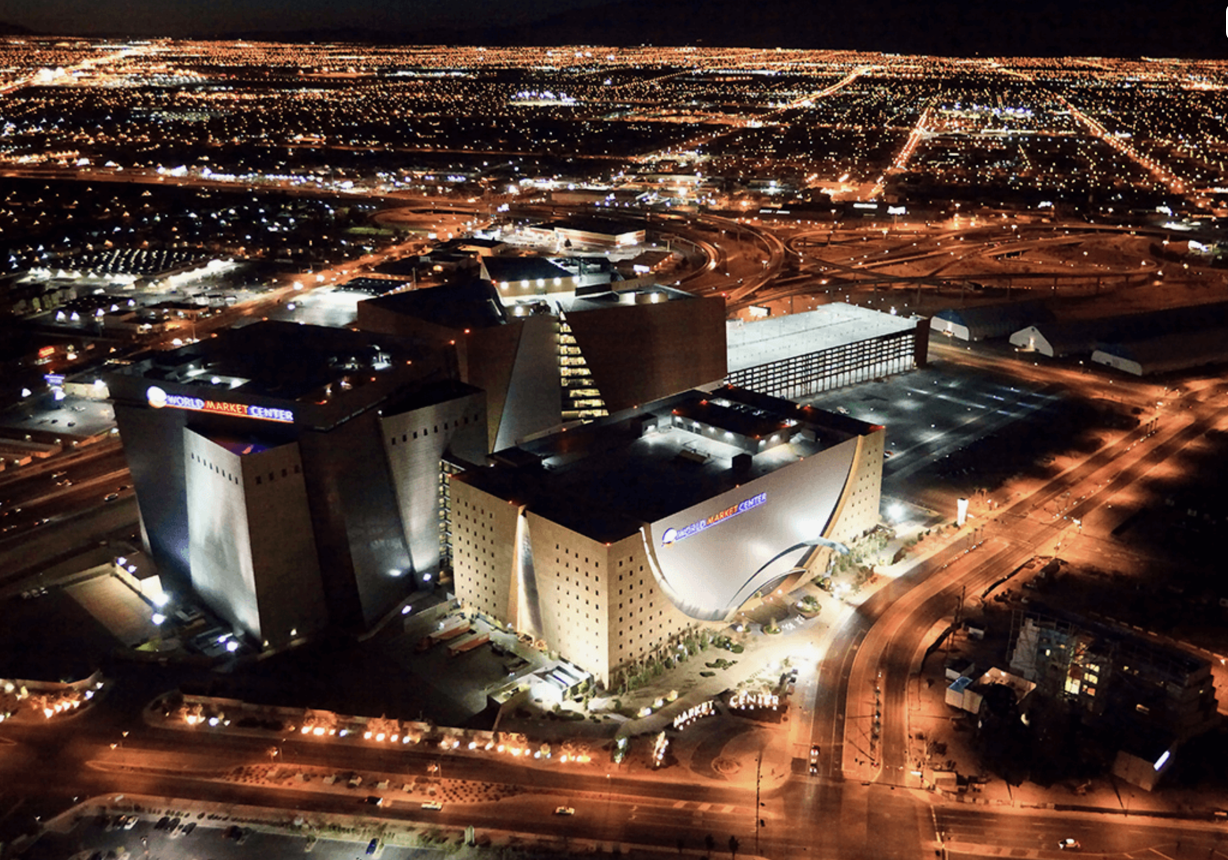
What we built. Las Vegas Market and World Market Center Las Vegas — ultimately a 550,000 square meter (5,000,000 square feet) exhibition property — launched. As part of the executive leadership team. I built the international strategy, marketing and agent networks, and established partnerships and joint ventures with Messe Frankfurt, Koelnmesse, Fiera Milano and Tarsus Group, alongside media groups, governments and trade associations worldwide. The segmentation scheme we created gave smaller exhibitors focused B2B communities — design, sustainable products, textiles, outdoor furnishings — rather than losing them in a hall built for the largest players. We also launched Living Green, the market's sustainable furnishings program, at a point when almost no US market had one.
What it changed. The launch overran the building. Demand for the first market in July 2005 exceeded the space available, and the show expanded into three additional pavilion structures and the neighboring Las Vegas Convention Center. An estimated 62,000 people attended across the first two markets.
Launched in 2005. Today Las Vegas Market hosts more than 3,500 brands.
"Tim was a member of our Executive Leadership Team at World Market Center and handled all activities related to our international business. He was innovative in his approach to building relationships and leveraging opportunities for joint ventures or shared marketing. Tim built international business platforms with government agencies and trade associations — he is very skilled and adept at identifying or creating mutual opportunities."
Robert Maricich — Founder and Executive Chairman, ANDMORE (formerly International Market Centers); Chief Executive at the time of this engagement
Mill Collective
Convened commercial partners to open access for small producers.
High Point, North Carolina and Round Top, Texas · 2017–2023 · Co-founder, with Luciana Mikos
The situation. Interior designers and commercial clients wanted authentic, customizable, sustainably produced American furnishings. The makers producing exactly that had no route to them — individually too small to take a High Point showroom, and invisible to the trade without one. They were essentially artists working in isolation with minimal knowledge and ability to reach their potential clients.
What we built. A curated platform carrying more than seventy-five independent studios and small-batch producers across the country — furniture, lighting, textiles, rugs, ceramics and accessories, all handcrafted in the US using sustainable practices — running as a showroom and an e-commerce business together rather than as one or the other. Makers stayed in their workshops; we handled everything else.
The model ran on collaboration rather than property. Instead of leasing, we partnered each season with established brands, venues and media — Bobo Intriguing Objects, Cisco Home, Red Egg and Plant Seven in North Carolina, and The Halles in Round Top, Texas — which is how seventy-five small studios reached the trade without any of them carrying a showroom.
We stayed deliberately nomadic, activating neglected buildings rather than occupying finished ones, and in doing so contributed to urban rejuvenation in downtown High Point — including a season in the town's oldest building, the former courthouse. We partnered with successful design brands who were eager to support our community, and allow them to leverage off of their established clientele.
What it changed. More than seventy-five makers reached the world's largest furnishings marketplace at a fraction of what individual entry would have cost, and designers got a curated, trusted route to domestic sourcing across both channels. Programming included Meet the Maker events, juried exhibitions, and curatorial partnerships with organizations including the Black Artists + Designers Guild, Buzzi Space and Cisco Home. We were able to gain editorial for our makers in publications like Architectural Digest, Wallpaper, DeZeen which is far beyond anytrhing they could have accomplished on their own.
"We created Mill Collective to plant a seed of innovation in the U.S. furnishings sector and to support the entrepreneurial spirit of modern-day artisans."
PaperCity Magazine, March 2022
Apex-Brasil
Design export strategy and program delivery
Sao Paulo, Rio de Janero, Bento Gonscalves Brazil into the New York, United States · 2014–2015
The situation. Brazil had a serious furniture manufacturing industry and a generation of designers whose work stood was well respected and competitive with anything on the global market. What it lacked was a route into the United States. Brazilian studios sold domestically and had no framework for taking their products — or their intellectual property — abroad. American buyers source on relationship and commercial fit rather than on portfolio, and were never going to find them unaided.
What we did. Apex-Brasil, Brazil's trade and investment promotion agency, engaged us as design export strategist for Orchestra Brasil, its design initiative with Sindmóveis. We built the strategy and delivered workshops across Rio de Janero, Sao Paulo and Bento Goncalves to forty leading studios: what US buyers actually specify and at what price, how to adapt work for commercial viability in that market without stripping out what made it worth exporting, and the branding, digital marketing, merchandising and logistics required to sell into it. We organized their participation in New York based ICFF fair, along with publicity and talks at the event.
UK Trade & Investment
National export strategy for the home furnishings sector
United Kingdom · 2002–2003
The situation. British furniture had design, craft and a manufacturing heritage, and was losing ground. The industry overwhelmingly consisted of small and mid-sized firms, each too small to build export capability alone, and there was no shared view of which markets to pursue or how. Individually, the companies were competitive. Collectively they had no strategy.
What we did. UK Trade & Investment commissioned us to write the worldwide export and marketing strategy for the UK home furnishings sector: which markets to target, in what order, through which channels, and what the industry and government each needed to do to get there.
What changed. The strategy was adopted by the Furniture Industry Strategy Group and the British Furniture Association, and funded by UKTI — our national industry strategy was fully taken up by the industry itself, and backed by the British government.
We then built part of it. In 2003 we founded The British Home, a consortium of fifty British SME producers reaching US retailers and interior designers through a shared showroom, exhibition and distribution program — the collective export route the strategy had argued for, actually put into practice.